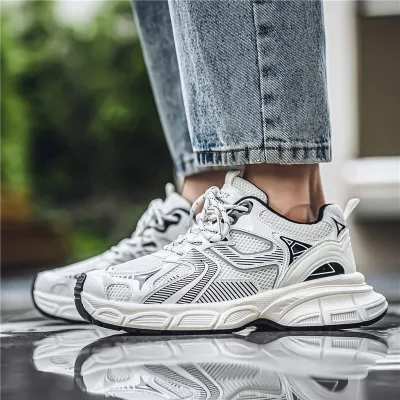
Source light weight breathable sneakers for sports, work, and daily wear
Find 30 options for light weight breathable sneakers designed for athletes, workers, and casual users. Compare features like slip resistance, anti-static properties, and material types from verified suppliers in China to meet specific sourcing needs.
Key considerations
Products List




Comprehensive Sourcing Guide
Strategic Sourcing Guide for Lightweight Breathable Sneakers
The global market for light weight breathable sneakers has expanded significantly, driven by a convergence of athletic performance demands and casual lifestyle trends. For B2B procurement professionals, navigating this category requires a disciplined approach that separates marketing assertions from verifiable product attributes. This guide synthesizes available product data and industry standards to provide a framework for sourcing footwear that balances comfort, durability, and safety. Buyers must recognize that "light weight" and "breathable" are functional outcomes of specific material choices and construction methods, rather than standalone guarantees. The following sections detail the technical specifications, compliance landscapes, cost structures, and evaluation criteria necessary for successful procurement in this sector.
Technical Specifications and Material Composition
The foundation of a lightweight breathable sneaker lies in its material architecture. Analysis of current market offerings reveals a diverse range of upper materials, with Nylon and Knitted Fabric emerging as primary candidates for achieving the desired breathability. These materials facilitate air circulation, reducing heat buildup during extended wear. In contrast, some listings indicate PU (Polyurethane) as an upper material, which may offer different durability characteristics but requires specific verification regarding breathability claims. The lining material also plays a critical role; options such as Mesh and Cotton Fabric are observed, with Mesh typically providing superior ventilation for high-activity scenarios.
The sole construction is equally vital for weight reduction and performance. The data indicates the use of TPR (Thermoplastic Rubber) and Rubber for outsoles. TPR is often selected for its balance of flexibility and weight, contributing to the "light weight" designation. The insole material frequently cited is EVA (Ethylene-Vinyl Acetate), a foam known for its cushioning properties and low density, which further reduces the overall mass of the footwear.
Heel height is another specification that influences the silhouette and comfort profile. Many products in this category are designed with a flat profile, specifically noted as 0-1cm or simply "Flat." This design choice aligns with the "Sport Casual Sneaker" style, offering stability and a natural foot position. However, buyers must verify the specific heel height for each SKU, as variations exist. The size range for these products typically spans Euro 36-47, with some specific models covering US sizes 40-44. It is essential to confirm that the size chart aligns with the target demographic, as discrepancies between Euro and US sizing can lead to fulfillment errors.
Compliance Standards and Safety Features
When sourcing safety-oriented or performance footwear, adherence to recognized standards is non-negotiable. The provided data highlights a specific set of EU standards applicable to certain models, including Sb, Sbp, S1, S1p, S2, and S3. These classifications denote varying levels of protection against water, oil, heat, and mechanical hazards. For instance, S1 and S2 standards generally relate to anti-static properties and water resistance, while S3 often includes cleated outsoles and water penetration resistance.
Buyers must carefully distinguish between general casual sneakers and those meeting specific safety standards. Not all lightweight sneakers are designed to meet these rigorous industrial classifications. The data notes that some products are explicitly "Not Acid and Alkali Resistant" and "Not Waterproof," while others are listed as "Waterproof." This inconsistency underscores the necessity of verifying the specific compliance status of each product line. If the procurement intent involves industrial or high-risk environments, the buyer must demand documentation confirming the specific EU standard (e.g., S1P or S3) that the product satisfies.
Additionally, specific functional features are often integrated into the design. The observed product attributes include Puncture-Resistant, Insulative, Steel Toe, Slip-Resistant, and Anti-Static capabilities. These features are not universal across all listings; some products are described as having "Anti Impact/Anti Puncture/Anti Static" as optional functions. Procurement teams should treat these as variable attributes that require explicit confirmation during the supplier negotiation phase. Relying on the general category name without verifying the specific feature set can result in purchasing footwear that fails to meet safety requirements.
Cost Drivers and Pricing Dynamics
The pricing landscape for light weight breathable sneakers is characterized by significant variability. Observed price ranges in the market span from $3 to $43.99 USD. This wide disparity is driven by several factors, including material quality, brand positioning, and the complexity of the manufacturing process. Products featuring hand-made construction, as noted in the data, typically command higher price points due to the labor intensity involved. Conversely, mass-produced items with standard specifications may fall at the lower end of the spectrum.
Material costs are a primary driver. The use of specialized fabrics like Knitted Fabric or high-grade Nylon often increases the base cost compared to standard PU or Cotton constructions. Furthermore, the inclusion of safety features such as Steel Toe caps or puncture-resistant midsoles adds material and manufacturing expenses. The packing requirements also influence the final cost; while some suppliers offer packing "According to Your Request," others use standard boxes with specific dimensions like 251212CM or 32.520.512CM. Custom packaging solutions, while beneficial for branding, will inevitably increase the unit cost.
Buyers should also consider the Minimum Order Quantity (MOQ) as a cost factor. The observed MOQ range is broad, extending from 1 to 1000 units. For small buyers or those testing new designs, suppliers offering an MOQ of "One Pair" or very low quantities provide flexibility, though the per-unit cost may be higher. Larger orders typically benefit from economies of scale, but the buyer must weigh the storage and cash flow implications of ordering 1000 units against the potential savings.
Supplier Evaluation and Operational Capabilities
Selecting the right supplier requires a rigorous evaluation of their operational capabilities and transparency. The data indicates that production origins are primarily located in Shandong, China, and generally within China. While this provides a geographic baseline, buyers should not assume uniform quality across all suppliers in this region. Verification of the supplier's specific factory location and capacity is essential.
Lead times and delivery schedules are critical components of the supplier evaluation. One observed data point mentions a delivery time of "About Three Days," which suggests a highly agile supply chain or a ready-stock model. However, this should not be generalized to all suppliers. Most B2B transactions involve longer lead times for production and shipping. Buyers must explicitly negotiate and document the expected lead time for their specific order volume and customization requirements.
Customization is a key differentiator in this market. The data confirms that customization is available, allowing buyers to tailor products to their specific brand needs. This can range from color variations, such as "Black" or "Multi," to specific feature integrations like "Elastic Band" closure patterns versus traditional "Lace-up" systems. Suppliers who offer flexible customization options can better support buyers in creating unique product lines. However, buyers must clarify the scope of customization, including any additional costs or minimum order thresholds required for custom runs.
Quality Control and Performance Verification
Ensuring consistent quality is paramount when sourcing footwear. The data presents a mix of attributes that require active verification. For example, while some products are described as "Breathable" and "Resilient," others are explicitly "Not Waterproof." This highlights the need for a robust quality control (QC) protocol that tests for the specific claims made by the supplier.
Buyers should implement a sampling strategy before committing to large orders. The data indicates that samples are available ("You Can Take a Sample"), which is a positive indicator for supplier confidence. However, the sample process should go beyond visual inspection. Buyers must test the physical properties of the sample, including the breathability of the Knitted Fabric or Nylon upper, the resilience of the EVA insole, and the slip resistance of the TPR or Rubber outsole.
For products claiming safety features, third-party testing is often necessary. If a supplier claims a product meets S1 or S3 standards, the buyer should request the official test reports. Relying solely on the supplier's word regarding standards like "Anti-Static" or "Puncture-Resistant" poses a significant risk. The presence of a "Steel Toe" feature, for instance, requires verification of the impact and compression resistance ratings to ensure it meets the claimed safety level.
Long-Term Procurement Considerations
Sourcing light weight breathable sneakers is not merely a transactional activity but a strategic relationship that impacts long-term brand reputation. Buyers should consider the sustainability and durability of the materials used. While the data mentions materials like Cotton and Nylon, it does not provide specific information on recycled content or environmental certifications. The mention of "GOTS" in the background data suggests that organic standards may be relevant, but this should not be assumed without explicit confirmation from the supplier.
Inventory management is another long-term consideration. The wide range of sizes (Euro 36-47) and the availability of unisex and male-specific models require careful forecasting. Overstocking on specific sizes can lead to markdowns, while understocking can result in lost sales. Buyers should analyze historical sales data to determine the optimal size distribution for their target market.
Finally, the evolution of product standards and consumer expectations must be monitored. The market for breathable sneakers is dynamic, with new materials and technologies emerging regularly. Suppliers who demonstrate a commitment to innovation and quality improvement will be better partners for long-term growth. Buyers should establish clear communication channels with suppliers to stay informed about new product developments and changes in manufacturing capabilities.
Summary of Key Product Attributes
To assist in the final selection process, the following table summarizes the key attributes observed in the market data. This comparison highlights the variability in specifications that buyers must navigate.
| Attribute Category | Observed Variations | Verification Requirement |
|---|---|---|
| Upper Material | Nylon, Knitted Fabric, PU, Cotton | Confirm breathability and durability claims. |
| Lining Material | Mesh, Cotton Fabric | Verify comfort and moisture-wicking properties. |
| Sole Material | TPR, Rubber | Test for slip resistance and weight. |
| Safety Standards | Sb, Sbp, S1, S1p, S2, S3 | Request official test reports for claimed standards. |
| Water Resistance | Waterproof, Not Waterproof | Conduct water penetration tests on samples. |
| Closure Pattern | Lace-up, Elastic Band | Ensure fit and ease of use for target demographic. |
| Origin | Shandong, China; General China | Verify factory location and capacity. |
| MOQ | 1 to 1000 | Negotiate based on order volume and budget. |
| Price Range | $3 - $43.99 USD | Align price with quality expectations and volume. |
By adhering to these guidelines and maintaining a rigorous approach to verification, B2B buyers can successfully source light weight breathable sneakers that meet their specific operational and commercial requirements. The key lies in treating product attributes as observations to be validated rather than assumptions to be accepted.
FAQs
What upper materials are used for light weight breathable sneakers?
Nylon and knitted fabric are the primary upper materials used to achieve breathability. These materials facilitate air circulation, though some listings also specify PU or cotton, requiring verification of the specific product listing for accurate material composition.
Which EU safety standards apply to these sneakers?
Specific models comply with EU standards including Sb, Sbp, S1, S1p, S2, and S3. These classifications indicate varying levels of protection against water, oil, and mechanical hazards, so buyers must confirm the exact standard for their intended use case.
Can I request custom packaging for these sneakers?
Customization is available, including packaging options according to your request or standard boxes. While some products use standard dimensions like 25 by 12 by 12 centimeters, buyers can negotiate specific packing requirements to align with their branding needs.
How is the heel height defined for these products?
Many products feature a flat profile with a heel height of 0 to 1 centimeter. This design supports a sport casual sneaker style, but buyers should verify the specific heel measurement for each SKU as variations exist across different models.
What is the minimum order quantity for these sneakers?
The minimum order quantity ranges from one pair to 1000 units depending on the supplier. Small buyers can often order a single pair, while larger orders may benefit from economies of scale, though per-unit costs may vary based on volume.
Are these sneakers waterproof or water resistant?
Product attributes vary, with some listings explicitly stating they are waterproof while others are not. Buyers must verify the specific waterproof status of each model, as some are designed for general casual wear while others may meet specific water resistance standards.
Where are these sneakers manufactured?
Production origins are primarily located in Shandong, China, and generally within China. While this provides a geographic baseline, buyers should verify the specific factory location and capacity of the supplier to ensure consistent quality and reliable delivery schedules.